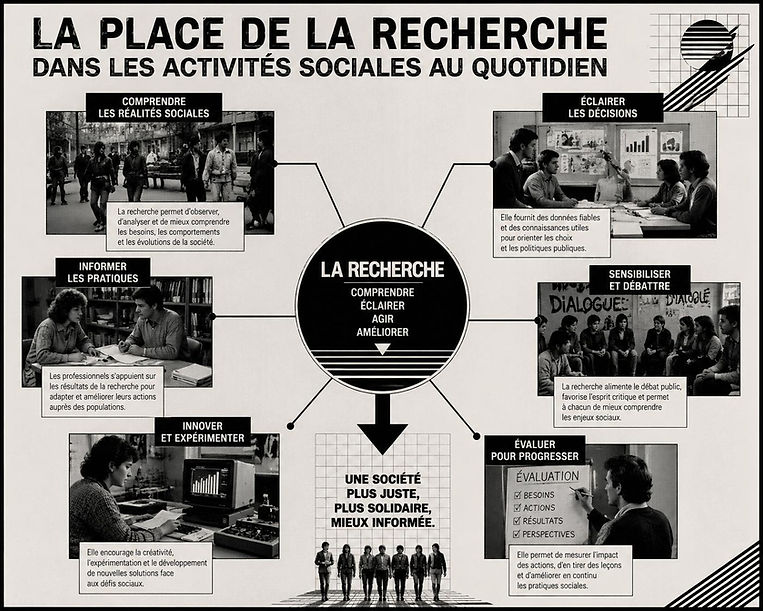
THE PLACE OF RESEARCH IN DAILY SOCIAL ACTIVITIES
Matthieu Marchal

Looking for the Masters
CATHERINE BALET
Exhibition from November 5th to December 5th, 2026
Opening on November 5th at 6:30 PM
Curator : Aline Pujo - PhotoDays
Interface conference on November 4th, 6 to 8 PM Amphithéâtre Descartes (Sorbonne).
Born in 1959, Catherine Balet lives between Paris and the Dordogne region of France. A graduate of the École nationale supérieure des Beaux-Arts in Paris, she began her career as a painter before turning to photography in the early 2000s. This transition marked the starting point of a sensitive visual oeuvre, informed by a sociological, pictorial, and experimental approach.
Her first series, Identity, anchors her work in contemporary reality through portraits of teenagers taken with a large-format camera. With Strangers in the Light, she introduces a pictorial dimension to her images, borrowing from the chiaroscuro of the Old Masters to explore the impact of digital technology on light. Between 2013 and 2016, she created Looking for the Masters in Ricardo’s Golden Shoes, a series that examines the legacy of the great names in photography while questioning the future of the medium. In this series, she reinterprets iconic works from photographic history with a keen awareness of ongoing technological and cultural transformations. In 2017, the series Moods in a Room marked a deliberate return to painting. She experimented with the limits of the photographic medium through layering and textures, questioning the boundary between photography and painting. The interplay of transparencies, light, and materials reinforces an introspective and sensory approach to time and space. Since 2021, Catherine Balet has continued this exploration in the series Endless, where she examines the transformations of nature throughout the seasons.


Encyclopéd人工智慧 : Reverse Archaeology of the Future Past
MAURICE BENAYOUN
Encyclopéd人工智慧 (prononced « Encyclopedilla », AI, in Chinese, 人工智,慧 litt.: "Artificial Wisdom") is a conceptual artwork that uses artificial intelligence as an instrument of reverse archaeology: no longer to reconstruct the past from its traces, but to draw from earlier bodies of knowledge the futures they held in potential.
The work takes Diderot and d’Alembert’s Encyclopédie as its matrix. Published between 1751 and 1772, its twenty-eight volumes, nearly 74,000 articles and some 2,600 illustrated plates may now appear as a distant analogue ancestor of large language models (LLMs). The Encyclopédie assembled not so much “all the knowledge in the world” as what an era was able to say about itself—and what it still believed should remain unsaid. Its critical ambition helped set in motion the cognitive bulldozer that would eventually shake the throne of a king ruling by divine right.
Several decades earlier, during the reigns of Louis XIV and Kangxi, knowledge was already circulating between France and China as a form of prestige capital: a lavish potlatch of instruments, techniques, words and images, generous in appearance but seldom free of political intent. Science travelled with the missionaries, faith with the clocks, and geopolitics was never far from the stars.
The work casts its artificial intelligences as twenty-seventh-century archaeologists from elsewhere—but where, exactly? Finding a fragmentary Encyclopédie, much as the Dead Sea Scrolls were once found in the caves of Qumran, they do not attempt a faithful reconstruction of the eighteenth century. Instead, they search it for the possible twenty-first centuries it carried within it, but could not yet name: an archaeology of the future past.
The corpus moves between two languages, French and Chinese. This translation does not claim to eliminate linguistic and cultural biases—no translation could claim such innocence—but to make them productive. Chinese operates as an agent of conceptual deviation, displacing inherited categories and allowing unsuspected interpretations to emerge. It is here that the protocol neuro-diverges.
Algorithmic artifice then kneads the archive like primordial clay, sketching both humanity’s transcendence and its disappearance. In Encyclopéd人工智慧, the latent space of informed matter fuses the futures of the Anthropocene into a playful and speculative form of augmented serendipity.


Maurice Benayoun is a French visual artist, curator, and theorist. After completing a dual degree in Fine Arts at Paris 1 Panthéon-Sorbonne University and in Modern Literature at Paris 4 Sorbonne University, he became a teacher, specializing in art, video creation, and new media from 1984 to 2009 at Paris 1 Panthéon-Sorbonne University. Simultaneously, he developed an artistic practice in digital art. Photography, video, installation, performance… his work is protean. For the past forty years, he has used a wide variety of tools as they have emerged or even pionneering their use: computer-generated imagery, virtual reality, robotics, Blockchain, artificial intelligence, and more. Blending research and creation, his work is exhibited in over 30 countries. He earned his doctorate in Fine Arts and Art History in 2008 and became a lecturer at Paris 8 University the following year.
Maurice Benayoun is the co-founder and artistic director of CITU (Création Interactive Transdisciplinaire Universitaire – University Interactive Transdisciplinary Creation), where he continues his research, creative work, and reflection on emerging media. In 2011, he founded H2H Lab (Human to Human Lab), a federation of laboratories and organizations dedicated to research in the field of new media and their aesthetic and social implications. In September 2012, he became a professor and researcher at the School of Creative Media at City University of Hong Kong, where he taught for over ten years and founded Neuro Lab Design. In 2024, he becomes part of the Distinguished Professor la School of Arts de l'Université de Nanjing (China) where he founds the AAAILab (Art And Architecture Lab) and the DIAL (Digital Intermedial Art Lab).